
Hormone Therapy for Weight Loss: What HRT Can and Cannot Do

Contents
- Table of Contents
- The Science of Hormone Replacement Therapy for Weight Loss
- The Role of Hormones in Weight Loss
- HRT for Weight Loss
- Does HRT help with Weight Loss
- Risks and Side Effects of HRT for Weight Loss
- Conclusion
- FAQs
- What is hormone therapy for weight loss?
- What is the best HRT for weight loss?
- What does HRT help with weight loss?
- Does HRT help with weight loss?
- Sources
Hormone replacement therapy (HRT) is a medical treatment that replaces hormones the body makes less of after menopause. It is mainly used to relieve menopause symptoms such as hot flashes.
Many women gain weight around menopause and wonder whether HRT can help with weight loss. The short answer: HRT is not a weight-loss treatment, and it is not prescribed for that purpose.
In this article, we explain how menopause affects weight, what HRT can and cannot do, and the real risks and benefits to discuss with your doctor.
Table of Contents
- The Science of Hormone Replacement Therapy for Weight Loss
- The Role of Hormones in Weight Loss
- HRT for Weight Loss
- Risks and Side Effects of HRT for Weight Loss
- Conclusion
- FAQs
The Science of Hormone Replacement Therapy for Weight Loss
HRT is a medical treatment that involves taking hormones that are no longer produced by the body. It is commonly used to treat symptoms of menopause, such as hot flashes and vaginal dryness. HRT can involve taking estrogen alone or a combination of estrogen and progesterone.
Estrogen is the primary female sex hormone, responsible for the development and maintenance of female reproductive tissues, as well as secondary sexual characteristics such as breast development. Progesterone is another female sex hormone that plays a role in the menstrual cycle and pregnancy.
During menopause, levels of estrogen and progesterone naturally decrease in the body, leading to a range of symptoms such as hot flashes, night sweats, and mood changes. HRT is used to supplement the body with these hormones, alleviating these symptoms.
Some people hope HRT will also help with weight loss. The evidence does not support using it that way.
The NHS says there is little evidence that most types of HRT make you put on weight, and that weight gain around menopause often happens whether or not you take HRT. The flip side is that HRT is not a reliable way to lose weight either.
The Role of Hormones in Weight Loss
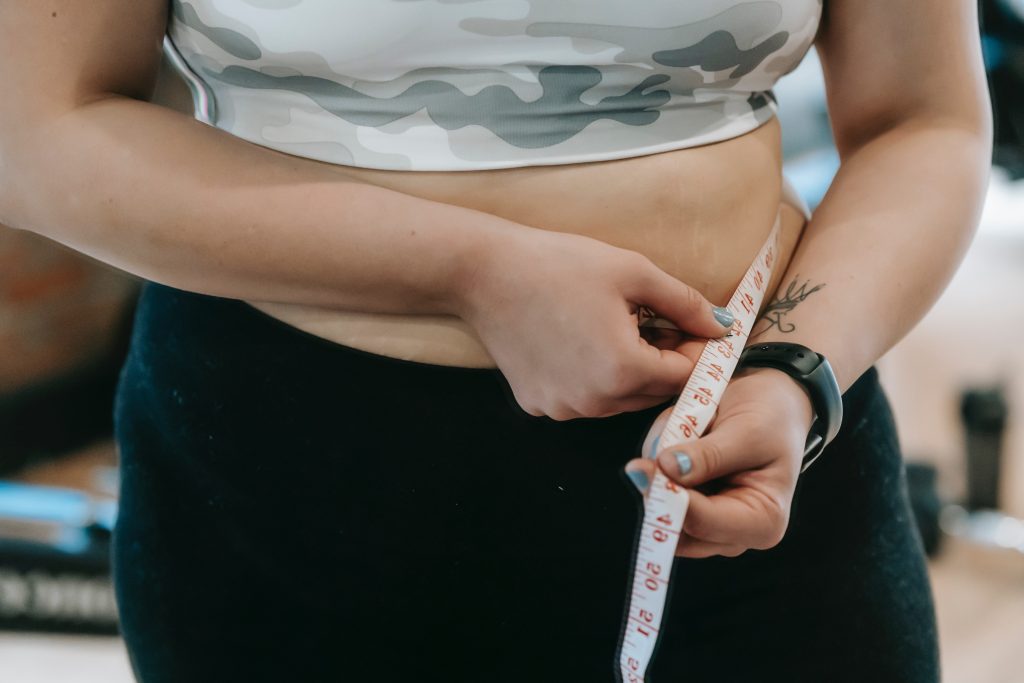
Photo by Andres Ayrton from Pexels
Hormones play a key role in regulating weight and metabolism in the body. Some of the hormones that are involved in weight regulation include:
- Leptin: a hormone that signals to the brain that the body has enough energy stored.
- Ghrelin: a hormone that stimulates hunger and appetite.
- Insulin: a hormone that regulates blood sugar and helps the body store energy, including as fat.
- Thyroid hormones: hormones that regulate metabolism and energy use in the body.
Around menopause, falling estrogen is linked to a shift in where the body stores fat, with more body fat around the abdomen.
Weight gain at this stage also has other causes. Muscle mass tends to decline with age, activity often drops, and sleep problems from night sweats can affect appetite.
That is why lifestyle changes remain the main approach to menopause weight gain.
HRT for Weight Loss
HRT is not used for weight loss. Some studies suggest it may influence where fat is stored, but it has not been shown to cause meaningful weight loss, and its risks mean it should not be taken for that purpose.
Does HRT help with Weight Loss
No. HRT does not reliably cause weight loss. It comes in two main types, prescribed for menopause symptoms: estrogen-only therapy and combined estrogen and progestogen therapy.
Estrogen-only therapy is typically recommended for women who have had a hysterectomy, as there is no need for a progestogen to protect the uterus.
Combined therapy is typically recommended for women who still have their uterus. HRT comes as tablets, patches, gels, and sprays, and the type will depend on individual needs and health history.
If HRT relieves symptoms like poor sleep and hot flashes, it may make it easier to stay active and eat well. But the weight work still comes from a balanced diet and regular exercise.
Risks and Side Effects of HRT for Weight Loss
Photo by Andres Ayrton from Pexels
HRT can be an effective treatment for menopause symptoms, but it has risks and side effects. Those risks are one more reason not to use it for weight loss.
Increased risk of breast cancer
Combined HRT can slightly increase the risk of breast cancer. The NHS estimates around 5 extra cases of breast cancer in every 1,000 women who take combined HRT for 5 years.
The risk rises the longer you take it and falls again after you stop. Estrogen-only HRT causes little or no increase in breast cancer risk.
Increased risk of heart disease and stroke
According to the NHS, HRT has little or no effect on the risk of coronary heart disease. HRT tablets, but not patches, gels, or sprays, slightly increase the risk of stroke, though the risk is still very low, especially under age 60.
Blood clots
HRT tablets can increase the risk of blood clots, which can lead to deep vein thrombosis (DVT) or pulmonary embolism (PE), although the risk is still very low. Patches, sprays, and gels do not increase this risk.
Women who are overweight or have a personal or family history of blood clots should discuss this with their doctor.
Gallbladder disease
Estrogen taken by mouth has been linked to a higher risk of gallbladder problems, so tell your doctor if you have a history of gallstones.
Headaches
HRT may cause headaches or migraines, particularly in women who are prone to these types of headaches.
Mood changes
HRT can also cause mood changes, including low mood. Side effects like these often settle after a few weeks.
Bloating and water retention
Some women may experience bloating or water retention as a side effect of HRT, particularly in the first few months of treatment.
HRT should not be started for weight loss. If you are considering it for menopause symptoms, a doctor can help you weigh the benefits against the risks and monitor for side effects. Women who have a history of breast cancer, heart disease, blood clots, or other health concerns may not be good candidates for HRT.
Women who have undergone a hysterectomy may be able to use estrogen-only therapy, while women who still have their uterus will likely need combined estrogen and progesterone therapy to protect against endometrial cancer.
Overall, while HRT may be an effective treatment for some women who are experiencing menopause-related symptoms, it is important to carefully consider the potential risks and benefits before starting this treatment.
Conclusion
Hormone replacement therapy (HRT) is a medical treatment that can help alleviate symptoms associated with menopause, and there is growing interest in the potential of HRT to aid in weight loss.
HRT is not a weight-loss treatment. There is little evidence that most types cause weight gain, and no good evidence that they cause meaningful weight loss.
HRT has real risks and benefits, so decide on it with your doctor based on your symptoms and health history.
For menopause weight gain, a balanced diet, strength training, regular activity, and good sleep are the proven foundation.
FAQs
What is hormone therapy for weight loss?
There is no approved hormone therapy for weight loss. Menopausal hormone therapy (HRT) uses estrogen, often with a progestogen, to relieve symptoms like hot flashes. It is not a weight-loss treatment, and there is little evidence that most types of HRT cause weight gain either.
What is the best HRT for weight loss?
No type of HRT is prescribed for weight loss. The right HRT depends on your symptoms, age, medical history, and whether you still have a uterus. Patches, gels, and sprays carry a lower risk of blood clots than tablets, so your doctor will weigh these factors with you.
What does HRT help with weight loss?
HRT is prescribed for menopause symptoms, not weight loss. Some studies suggest it may influence where the body stores fat, but it should not be used to lose weight. Diet, activity, sleep, and, for some people, prescription weight-loss medicines are the proven options.
Does HRT help with weight loss?
Not reliably. The NHS says there is little evidence that most types of HRT make you put on weight, and HRT is not a weight-loss treatment. Weight gain around menopause often happens with or without HRT, so lifestyle changes remain the main approach.


