
DMSO for Stubborn Fat: What the Evidence Says
Contents
Stubborn fat is a common frustration for people trying to lose weight. Even with a healthy diet and regular exercise, areas like the belly, hips and thighs can be slow to change.
Some people turn to DMSO hoping to speed things up. DMSO, short for dimethyl sulfoxide, is a solvent that also has a few medical uses.
The bottom line up front: there is no reliable evidence that DMSO breaks down fat or helps with weight loss.
Some people promote DMSO for weight loss, particularly for stubborn fat. In this article, we explain what DMSO is, what the evidence shows, its risks, and what actually helps with stubborn fat.
Table of Contents
- What is DMSO?
- What is stubborn fat?
- How DMSO Helps with Stubborn Fat
- Tips for Using DMSO weight loss Safely
- Conclusion
- FAQs
What is DMSO?
DMSO is a chemical compound used for decades as an industrial solvent and in some medical settings. In its pure form, it is a clear, colorless, essentially odorless liquid.
It can pass through the skin easily and carry other substances with it. That property is why it has been studied as a drug carrier, and also why it can be risky.
Benefits of DMSO
DMSO's FDA-approved label covers only one use: a prescription solution placed directly into the bladder to relieve symptoms of interstitial cystitis. It has not been approved as safe and effective for any other use.
It has been studied for pain and inflammation, such as arthritis, but the evidence is limited. DMSO has also been promoted for weight loss. There is no good evidence for that use.
How DMSO works
DMSO increases the permeability of the skin, which helps other substances get absorbed. There is no evidence that this breaks down fat cells or helps the body burn fat.
Claims that DMSO reduces "inflammation-driven" fat are also unproven. Weight gain is driven mainly by eating more calories than you burn over time.
In the next section, we'll look at stubborn fat and why it can be so challenging to lose.
What is stubborn fat?
Stubborn fat is a term for fat in certain areas that seems slow to respond to diet and exercise. It is often found on the belly, hips, thighs and upper arms.
Where your body stores fat depends largely on genetics, sex hormones and age.
Why is it hard to lose stubborn fat?
Fat tissue in different body areas responds differently to the hormones that release stored fat. Fat on the hips and thighs, for example, tends to be released more slowly in some people.
Blood flow and hormone levels also vary by area, and these patterns change with age and menopause.
You can't choose where you lose fat first. Spot exercises or creams won't target one area, but losing overall body fat will eventually shrink stubborn areas too.
Because of these challenges, some people look for shortcuts to break down stubborn fat. Next, we'll look at what DMSO can and can't do for weight loss.
How DMSO Helps with Stubborn Fat
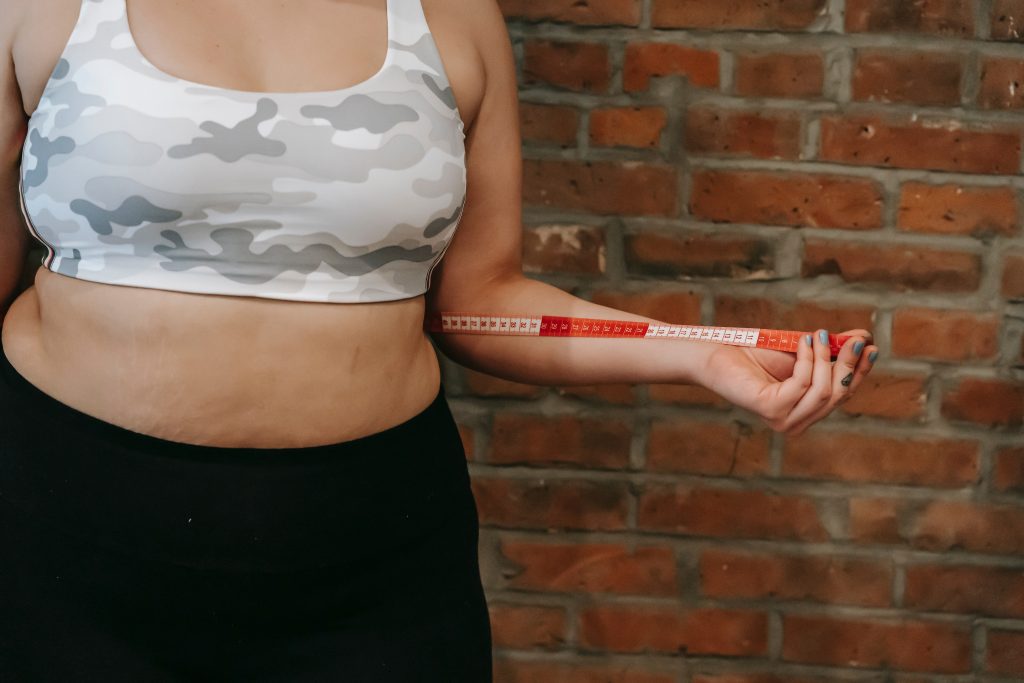
Photo by Andres Ayrton from Pexels
In short, it doesn't, as far as the evidence shows. The idea that making cell membranes more permeable "breaks down" fat cells has not been shown in people.
How DMSO breaks down stubborn fat
We found no human studies showing that DMSO reduces body fat. Claims online often point to lab or animal research, which does not show that rubbing DMSO on your skin will shrink fat.
Memorial Sloan Kettering's review of DMSO lists studied uses such as bladder treatment and pain, and does not mention fat loss.
Benefits and Risks of Using DMSO for Stubborn Fat
Benefits:
- No proven benefit for stubborn fat or weight loss.
- Prescription DMSO has one FDA-approved use: relieving interstitial cystitis symptoms when placed in the bladder by a clinician.
Risks:
- DMSO is not approved for over-the-counter use in any form because of insufficient evidence and potential toxicity.
- Industrial-grade DMSO, often sold online, may be contaminated with other chemicals.
- Because it carries substances through the skin, DMSO can increase absorption of contaminants, lotions or medicines on your skin.
- It commonly causes a strong garlic-like taste and breath or body odor, which can last for days.
- It can cause skin redness, itching and dryness, stomach upset, headache and dizziness, and occasional allergic reactions.
- It can strengthen the effects of other medicines.
Tips for Using DMSO weight loss Safely
There is no safe or proven way to use DMSO for weight loss, so we don't recommend it. If you are considering it anyway:
- Talk to a doctor first, especially if you take any medicines, are pregnant or breastfeeding, or have liver or kidney problems.
- Don't use industrial or "solvent-grade" DMSO on your body.
- Don't swallow DMSO or apply it to broken skin.
- Stop and seek medical care if you develop a rash, swelling or trouble breathing.
Weight loss is best achieved through a healthy diet and regular exercise, and there is no quick fix for stubborn fat.
Conclusion
DMSO is a powerful solvent with one narrow FDA-approved medical use. It has no proven role in breaking down stubborn fat or causing weight loss.
Over-the-counter DMSO products carry real risks, including contamination and increased absorption of other chemicals through the skin.
If stubborn fat bothers you, focus on overall fat loss through diet and exercise. For targeted fat reduction, talk with a qualified doctor about FDA-cleared procedures.
FAQs
Does DMSO break down fat?
There is no reliable evidence that DMSO breaks down fat or causes weight loss in people. It is FDA-approved only as a prescription treatment placed in the bladder for interstitial cystitis.
What are the dangers of DMSO?
DMSO can cause a strong garlic-like taste and breath odor, skin redness, itching and dryness, stomach upset, headache and dizziness. Because it carries other substances through the skin, it can increase absorption of medicines or contaminants.
Industrial-grade DMSO may be contaminated with other chemicals.
How often should DMSO be applied?
DMSO is not approved for over-the-counter use in any form, and there is no safe or effective schedule for using it on fat. Do not use it for weight loss.
Ask your doctor about proven options instead.
How do you get rid of stubborn fat cells?
You can't spot-reduce fat with exercise or creams. Losing overall body fat through diet and regular exercise is the best approach.
FDA-cleared procedures such as cryolipolysis, or liposuction, can remove fat in specific areas, but these should be discussed with a qualified doctor.
Sources
- RIMSO-50 (dimethyl sulfoxide) label, DailyMed, National Library of Medicine
- Dimethylsulfoxide, Memorial Sloan Kettering Cancer Center


