
Is Beef Jerky Good For Weight Loss
Contents
- What Is Beef Jerky
- Nutritional Profile Of Beef Jerky
- Benefits For Dieters
- How To Incorporate Into A Weight Loss Program
- Potential Health Risks
- Alternatives To Beef Jerky
- Tips For Making Healthy Choices
- Frequently Asked Questions
- What Is The Best Way To Store Beef Jerky?
- How Much Beef Jerky Should I Eat In A Day?
- Is Beef Jerky Suitable For Vegetarians?
- Are There Any Organic Beef Jerky Options?
- Are There Any Special Preparation Techniques For Beef Jerky?
- Conclusion
- Sources
Are you wondering whether beef jerky can be part of a weight-loss diet? The short answer is yes, in small portions. Jerky is high in protein and easy to carry, but it is also high in sodium and counts as a processed meat.
Protein helps you feel full, so a small serving of jerky can be more satisfying than chips or candy. On the other hand, the salt and the health concerns about processed meat mean it shouldn’t be an everyday staple.
In this article, we’ll look at beef jerky’s nutrition, how it can fit a weight-loss plan, the health risks, and healthier choices.
What Is Beef Jerky
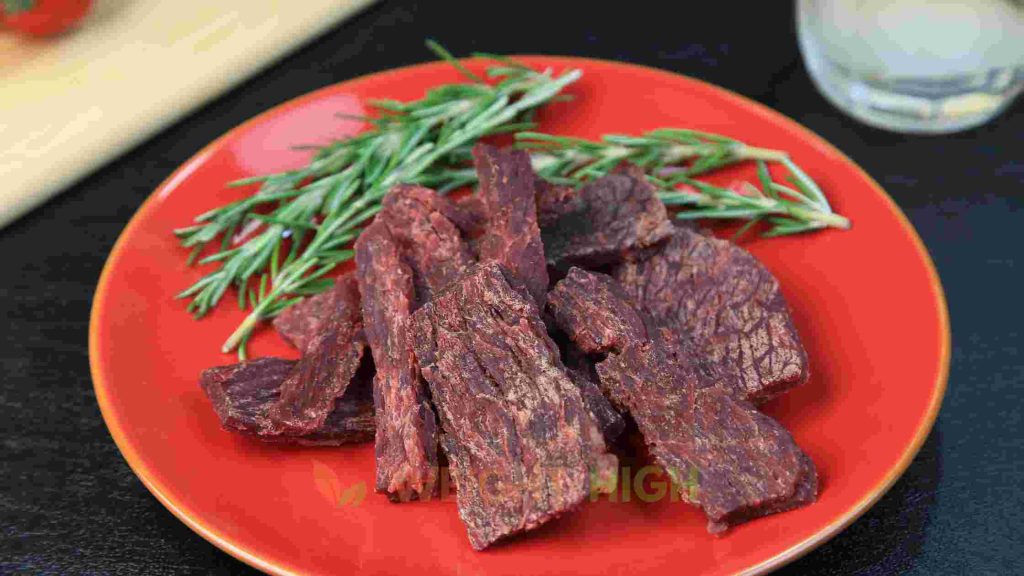
Beef jerky is lean beef that has been trimmed, sliced thin, seasoned and dried. Drying removes most of the water, which concentrates the protein and calories and lets jerky keep without refrigeration until it is opened.
Most commercial jerky uses lean cuts such as top round or sirloin. The meat is marinated in salt and seasonings such as pepper, garlic powder, soy sauce or Worcestershire sauce, and many brands add sugar, honey or other sweeteners.
Textures range from soft and chewy to dry and firm. Flavors run from plain or peppered to teriyaki and sweet varieties, which tend to contain more sugar.
Nutritional Profile Of Beef Jerky
According to USDA FoodData Central, 100 grams of a typical beef jerky snack has about 410 calories, 33 grams of protein, 26 grams of fat, 11 grams of carbohydrate and 1,780 mg of sodium.
That works out to roughly 116 calories, 9 grams of protein, 7 grams of fat and about 500 mg of sodium per 1-ounce serving. Brands vary widely, so check the label on the product you buy.
The sodium is the biggest drawback. One ounce can supply around a fifth of the 2,300 mg daily sodium limit recommended for most adults, and too much sodium raises blood pressure.
Jerky also provides iron, zinc and B vitamins, as other red meat does. Still, these nutrients are easy to get from less processed foods.
Benefits For Dieters
Beef jerky has a few real advantages for people trying to lose weight:
- Protein: Protein is more filling than most carbohydrates or fats, which can help curb snacking.
- Portability: Jerky needs no preparation or refrigeration before opening, so it is easy to pack for work, travel or hikes.
- Portion-friendly: Single-serving packs make it easier to stick to about an ounce.
There is no good evidence that eating jerky itself speeds up weight loss. It helps only if it replaces higher-calorie snacks within a calorie-controlled dieting plan.
Used that way, jerky can be a small part of a weight loss program built on healthy eating habits and regular exercise.
How To Incorporate Into A Weight Loss Program
If you enjoy jerky, these tips can help it fit your plan:
- As an occasional snack – Eat it now and then, not every day, because of the sodium and processed-meat concerns.
- Portion Control – Stick to about 1 ounce. Jerky is calorie-dense, and large bags make it easy to eat several servings without noticing.
- Substitute For Higher-Calorie Snacks – A serving of jerky can replace chips, cookies or pastries. Pair it with fruit or raw vegetables to add fiber and volume.
Choose lower-sodium, lower-sugar products and drink water with salty snacks.
Potential Health Risks
Beef jerky is a processed meat. The World Health Organization lists beef jerky and biltong among processed meats and classifies processed meat as a cause of colorectal cancer, with risk rising as intake increases.
Jerky is also high in sodium, which can raise blood pressure, and some products contain added nitrites and sugar. These are good reasons to treat jerky as an occasional snack rather than a daily one.
People with high blood pressure, heart disease or kidney disease should be especially careful with high-sodium snacks and may want to ask their doctor about them.
Alternatives To Beef Jerky
If you want a protein-rich snack with less sodium or no processed meat, consider these options:
| Snack | Why It Works |
|---|---|
| Turkey or chicken jerky | Often leaner than beef jerky, though still processed and salty; compare labels |
| Greek yogurt | High in protein, minimally processed, and a source of calcium |
| Hard-boiled eggs | Portable protein with no added sodium |
| Unsalted nuts or edamame | Protein plus fiber and healthy fats; measure portions |
| Plant-based jerky | Option for vegetarians; check sodium and sugar |
Sodium, calories and protein vary a lot between brands, so read the nutrition facts label before you buy.
Tips For Making Healthy Choices
When choosing any packaged snack, check the nutrition label for sodium, added sugar and serving size. A product that looks small may contain two or three servings.
Look for jerky with less sodium per serving and little or no added sugar. Simple seasonings such as black pepper usually mean fewer additives than sweet or teriyaki flavors.
Build most of your snacks around less processed foods, such as fruit, vegetables with hummus, yogurt, eggs or nuts, and save jerky for times when convenience matters most.
Frequently Asked Questions
What Is The Best Way To Store Beef Jerky?
Store unopened commercial jerky as the package directs and eat it by the date on the label.
Once opened, reseal it tightly and follow the label, which often says to refrigerate. Keep homemade jerky in airtight containers and eat it within the time recommended by your recipe source.
How Much Beef Jerky Should I Eat In A Day?
There is no official limit, but one serving of about 1 ounce is a sensible portion for a snack when it comes to weight loss.
That provides roughly 116 calories, 9 grams of protein and around 500 mg of sodium in a typical product. Because jerky is a processed meat, it is best eaten occasionally.
Is Beef Jerky Suitable For Vegetarians?
No. Beef jerky is made from beef. Plant-based jerky made from soy, seitan, mushrooms or jackfruit is available for vegetarians and vegans.
Plant-based jerky can also be high in sodium and sugar, so check the label to be sure it fits your health goals.
Are There Any Organic Beef Jerky Options?
Yes. Organic beef jerky is widely sold. Organic labeling refers to how the cattle were raised and the ingredients were grown.
It does not make jerky lower in sodium or calories, so still read the nutrition label.
Are There Any Special Preparation Techniques For Beef Jerky?
For homemade jerky, start with a lean cut, trim the fat, and slice it into thin, even strips. Marinate it in the refrigerator, not on the counter.
The National Center for Home Food Preservation advises making sure the meat reaches an internal temperature of 160°F to reduce the risk of foodborne illness, then drying it in a dehydrator or oven preheated to 140°F.
Conclusion
Beef jerky can fit a weight-loss diet in small portions. It offers protein and convenience, and about 116 calories per ounce in a typical product.
It is also high in sodium and counts as a processed meat, which the WHO links to colorectal cancer. Treat it as an occasional snack for weight loss, keep portions to about an ounce, and rely on less processed protein foods most of the time.
Sources
- Snacks, beef jerky, chopped and formed, USDA FoodData Central
- Cancer: Carcinogenicity of the consumption of red meat and processed meat, World Health Organization
- Jerky, National Center for Home Food Preservation (University of Georgia Extension)


