
How to Take Body Measurements for Weight Loss?
Contents
- Table of Contents
- Why Taking Body Measurements Is Important for Weight Loss
- What Measurements to Take for Weight Loss
- How to Take Body Measurements for Weight Loss: Female
- How to Measure Yourself for Weight Loss: Step-by-Step Guide
- Tips for Accurately Measuring Your Body for Weight Loss
- Interpreting Your Progress
- How to Adjust Your Workouts Based on Your Body Measurements
- Tips to Stay Motivated When Taking Body Measurements for Weight Loss
- Conclusion
- FAQs
- How often should I take my body measurements?
- What is the best time of day to take body measurements?
- Do I need to use specific tools to take my body measurements?
- Should I take all of my body measurements, or can I focus on specific areas?
- Can taking body measurements help me adjust my diet?
- Can I take body measurements even if I’m not trying to lose weight?
- Sources
Losing weight can be a challenging journey, but tracking your progress through body measurements can make it more manageable. Measuring yourself regularly can show changes the scale misses, especially around your waist. However, taking body measurements can be tricky if you don’t know what you’re doing.
In this article, we’ll guide you through the process of taking accurate body measurements for weight loss. We’ll provide you with step-by-step instructions, expert tips, and everything you need to know to measure yourself properly and track your progress more efficiently. Whether you’re a beginner or a seasoned weight loss tracker, this guide will help you master the art of taking body measurements for weight loss.
Table of Contents
- Why Taking Body Measurements Is Important for Weight Loss
- What Measurements to Take for Weight Loss
- How to Take Body Measurements for Weight Loss: Female
- How to Measure Yourself for Weight Loss: Step-by-Step Guide
- Tips for Accurately Measuring Your Body for Weight Loss
- Interpreting Your Progress
- How to Adjust Your Workouts Based on Your Body Measurements
- Tips to Stay Motivated When Taking Body Measurements for Weight Loss
- Conclusion
- FAQs
- How often should I take my body measurements?
- What is the best time of day to take body measurements?
- Do I need to use specific tools to take my body measurements?
- Should I take all of my body measurements, or can I focus on specific areas?
- 5. Can taking body measurements to help me adjust my diet?
- Can I take body measurements even if I’m not trying to lose weight?
Why Taking Body Measurements Is Important for Weight Loss
Taking body measurements is an effective way to track your progress during your weight loss journey. It helps you to:
- Measure your progress accurately
- Stay motivated
- Track your waist size, which is linked to health risk
Taking accurate body measurements is also important because it helps you to identify changes that might not be visible on the scale. For example, you may be losing inches around your waist but not seeing a significant change in your weight.
Waist size also matters for health. According to the NHLBI, a waist of more than 35 inches for women or more than 40 inches for men raises the risk of heart disease and type 2 diabetes.
What Measurements to Take for Weight Loss
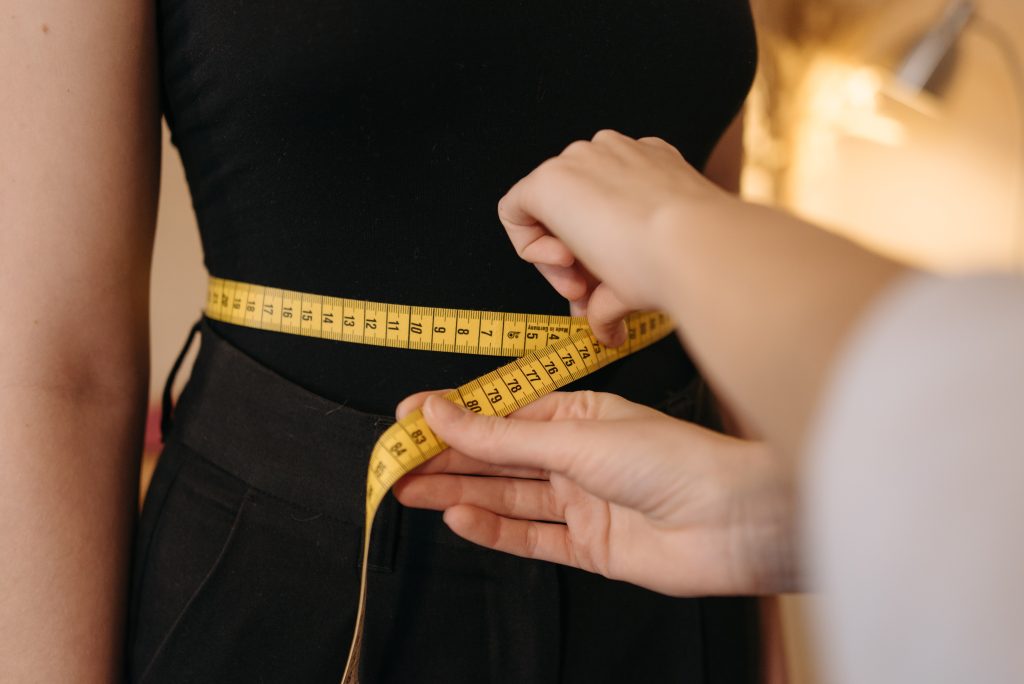
Photo by Pavel Danilyuk from Pexels
To get an accurate measurement of your body, you need to take several measurements. Here are the measurements you need to take:
- Waist circumference
- Hip circumference
- Thigh circumference
- Arm circumference
- Chest circumference
- Neck circumference
Waist circumference is the most useful of these for health. The others help you see overall changes in your shape.
It’s essential to measure the same spots each time. Measuring every 2 to 4 weeks is enough to see real trends.
How to Take Body Measurements for Weight Loss: Female
The method is the same for everyone, but many women also track bust measurements. Here’s how to take body measurements for weight loss if you’re female:
- Wear fitted clothing
- Use a flexible tape measure
- Stand up straight
- Measure the hips, thighs and bust at their fullest part, and the waist just above the hip bones
- Repeat the measurements two or three times and take an average
It’s essential to wear fitted clothing when taking body measurements, as loose clothing can make it challenging to get an accurate measurement. Use a flexible tape measure that wraps snugly around your body without pressing into the skin. By repeating the measurements two or three times and taking an average, you can ensure accuracy and get a comprehensive view of your progress.
How to Measure Yourself for Weight Loss: Step-by-Step Guide
Measuring yourself for weight loss is easy if you follow these simple steps:
- Get a flexible tape measure.
- Wear fitted clothing or no clothing at all.
- Stand up straight with your feet together.
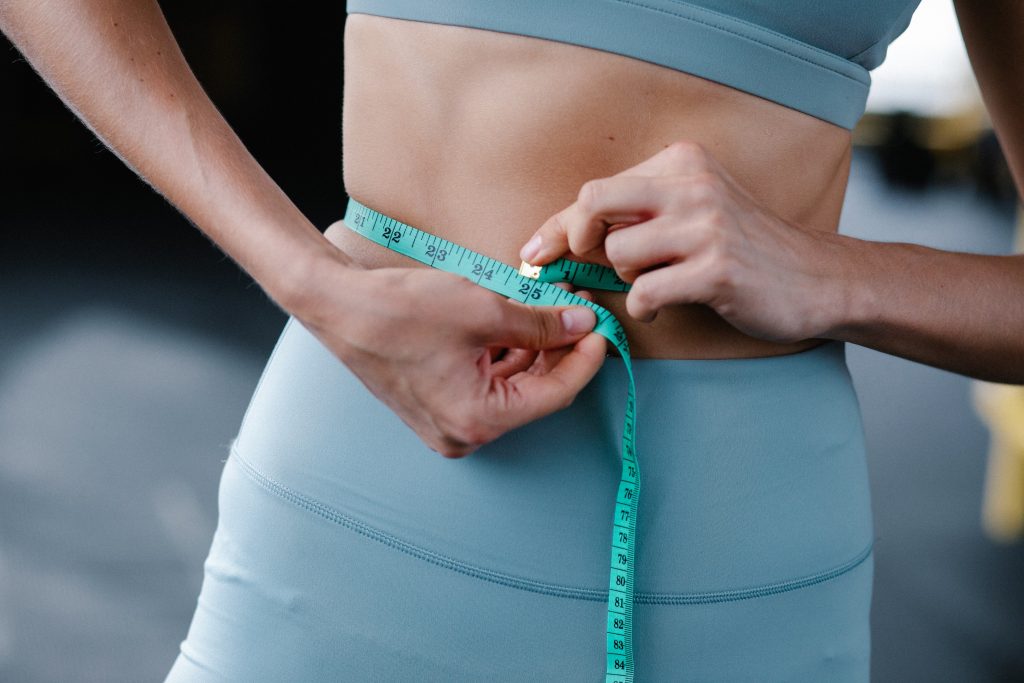
- Take the measurements at the appropriate locations. For your waist, place the tape around your middle just above your hip bones and read it right after you breathe out.
- Record your measurements.
It’s essential to take the measurements at the appropriate locations to ensure accuracy. By standing up straight with your feet together, you can ensure that your body is in the correct position for the measurements. Additionally, by recording your measurements each time, you can track your progress over time and make any necessary adjustments to your weight loss plan.
Tips for Accurately Measuring Your Body for Weight Loss
Here are some tips to help you take accurate body measurements for weight loss:
- Measure at the same time of day.
- Measure on the same day of the week each time.
- Take measurements on an empty stomach.
- Use a flexible tape measure.
- Measure at the same location each time.
It’s essential to take measurements under the same conditions each time to ensure accuracy. By measuring at the same time of day and on the same day of the week, you can track your progress consistently. Additionally, by measuring on an empty stomach, you can eliminate any variables that might affect your measurements. Using a flexible tape measure and measuring at the same location each time can also help ensure accuracy.
Interpreting Your Progress
After taking your body measurements, it’s essential to know how to interpret your progress accurately. Here’s what to look for:
- Consistency: Look for consistent progress over time. Small changes are better than no changes.
- Plateaus: If you’re not seeing progress, don’t get discouraged. Plateaus are normal and can last for several weeks.
- Overall trends: Look at the overall trend over several weeks. If you’re consistently losing inches, you’re on the right track.
- Non-scale victories: Celebrate non-scale victories, such as fitting into smaller clothing or feeling more energetic.
It’s essential to remember that weight loss is a journey, and progress takes time. Don’t get discouraged if you don’t see immediate results, and celebrate your progress, no matter how small.
How to Adjust Your Workouts Based on Your Body Measurements
Your body measurements can also help you adjust your workouts to achieve better results. Here’s how:
- You can’t choose where your body loses fat. Exercises such as squats or push-ups build muscle in those areas, but they don’t burn the fat over them (this idea is known as spot reduction).
- If your measurements have stalled for several weeks, look at your overall calorie intake and try increasing the duration or intensity of your workouts.
- Include strength training at least 2 days a week to help keep muscle while you lose fat.
- Consult with a personal trainer or fitness professional if you’re not sure how to adjust your workouts.
Your measurements show the overall trend. Use them to judge whether your plan is working, not to target specific body parts.
Tips to Stay Motivated When Taking Body Measurements for Weight Loss
Staying motivated during your weight loss journey can be challenging, especially if you hit a plateau or don’t see the results you want. Here are some tips to help you stay motivated when taking body measurements for weight loss:
- Focus on non-scale victories: Celebrate your progress, no matter how small, and focus on the positive changes in your life.
- Don’t compare yourself to others: Everyone’s weight loss journey is different, so focus on your progress and not others.
- Remember your “why”: Keep your motivation by reminding yourself of the reasons you started your weight loss journey.
- Celebrate your progress, no matter how small: Even small victories are worth celebrating, so take time to acknowledge and appreciate your progress.
Conclusion
Taking body measurements for weight loss is an essential aspect of tracking your progress, and it can help you stay motivated and focused on your goals. By following these tips, you can take accurate measurements, interpret your progress, adjust your workouts, and stay motivated throughout your weight loss journey. Remember to celebrate your progress and don’t get discouraged if you don’t see immediate results. With dedication and commitment, you can achieve your weight loss goals and live a healthier life.
FAQs
How often should I take my body measurements?
Every 2 to 4 weeks works well for most people. Inches change slowly, so measuring more often mostly picks up normal day-to-day swings, while waiting much longer can leave you without useful feedback.
What is the best time of day to take body measurements?
It’s best to take your body measurements at the same time of day, preferably in the morning, before eating or drinking anything. This helps ensure consistency in your measurements.
Do I need to use specific tools to take my body measurements?
A flexible, non-stretch tape measure is all you need. If you don’t have one, wrap a piece of string around the area, mark it, and measure the string with a ruler.
Body fat calipers measure skinfold thickness, which is a different measurement.
Should I take all of my body measurements, or can I focus on specific areas?
It’s recommended to take all of your body measurements, including your waist, hips, chest, arms, and thighs, to get a complete picture of your progress. However, if you’re focused on specific areas, you can prioritize those measurements.
Can taking body measurements help me adjust my diet?
Yes, in a general way. If your waist and weight have not changed for several weeks, you may need to adjust your overall calorie intake or activity.
Diet cannot target fat loss in one specific body area.
Can I take body measurements even if I’m not trying to lose weight?
Yes, taking body measurements can be helpful for tracking changes in your body composition, even if you’re not trying to lose weight. This can help you see progress in other areas, such as muscle gain or overall fitness levels.
Sources
- Aim for a Healthy Weight: Assessing Your Risk, National Heart, Lung, and Blood Institute
- Adult Activity: An Overview, Centers for Disease Control and Prevention


